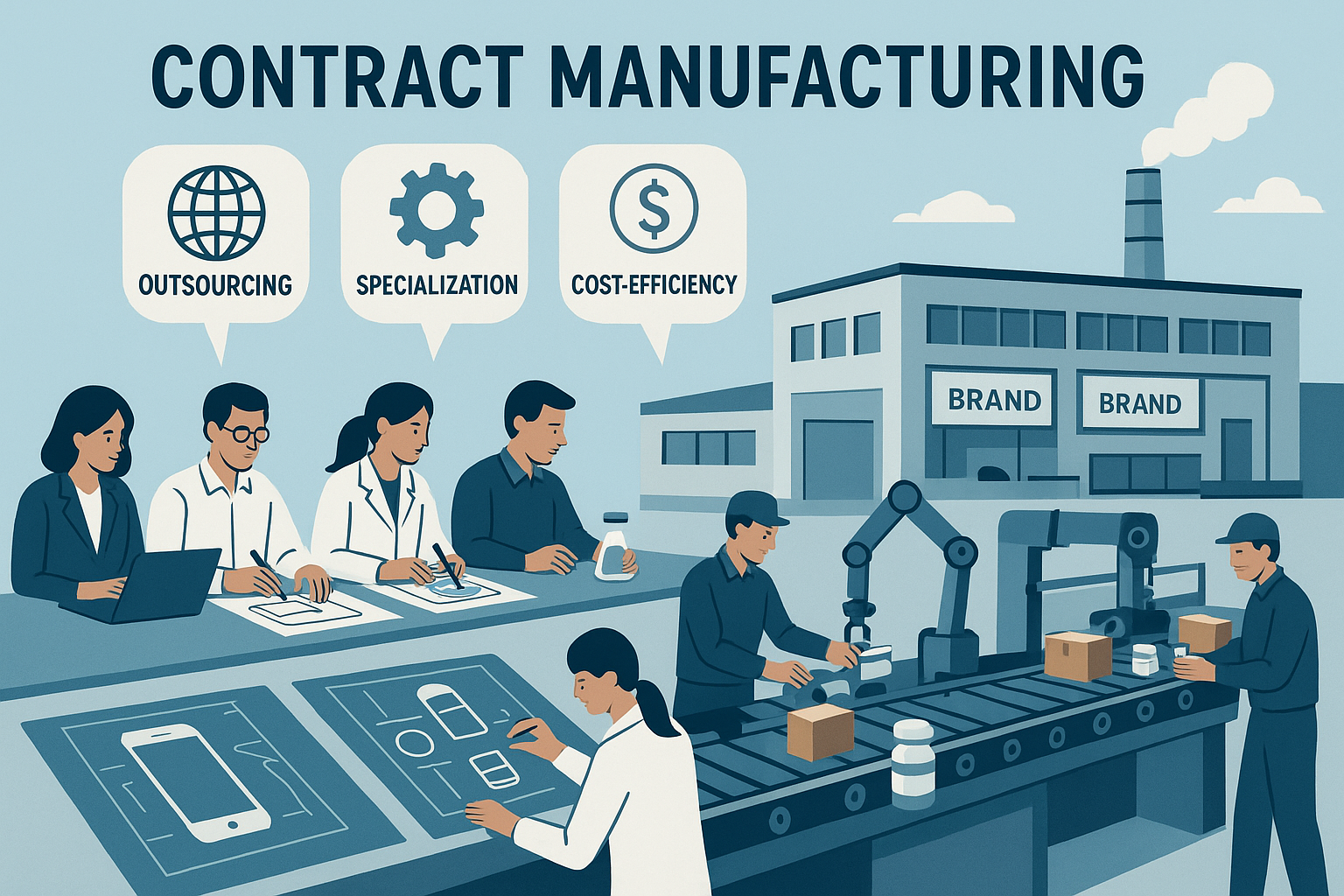
Understanding Contract Manufacturing
- Definition of contract manufacturing
- Types of industries that utilize this model
- Key players in the contract manufacturing sector
Contract manufacturing is a form of outsourcing where one company, the contractor, produces goods or services on behalf of another company. This model is prevalent in industries like electronics, pharmaceuticals, and automotive. It allows companies to increase their capacity by leveraging external facilities and expertise.
How Does Contract Manufacturing Work?
- Initial agreement and negotiation process
- Design, development, and production phases
- Quality control and delivery management
The process typically begins with a detailed agreement outlining terms, responsibilities, and production specifications. Companies often collaborate on design and development, ensuring product quality and brand consistency. Throughout the manufacturing process, stringent quality checks guarantee that the final product meets agreed-upon standards before delivery.
Benefits of Contract Manufacturing
- Cost efficiency and resource optimization
- Scalability and flexibility
- Access to expertise and advanced technology
Contract manufacturing offers numerous advantages, such as reduced operational costs and the ability to quickly scale production to meet market demand. By outsourcing to specialists, companies gain access to cutting-edge technologies and expertise without the need for heavy capital investment.
Potential Challenges and Considerations
- Managing quality control
- Intellectual property concerns
- Communication and logistical challenges
While the benefits are compelling, there are challenges to consider. Maintaining stringent quality standards and protecting intellectual property rights can be tricky. Effective communication and robust logistics are essential to overcoming these obstacles and ensuring a seamless production process.
In conclusion, contract manufacturing can be an excellent strategy for businesses looking to optimize productivity and focus on core competencies. If you’re considering this approach, it’s crucial to partner with a reliable manufacturer who can deliver quality, efficiency, and innovation. Ready to take your production to the next level? Explore partnership opportunities and leverage the power of contract manufacturing in today’s dynamic market! For more on optimizing business processes, feel free to contact us.
For further reading, read our other articles on this topic.